
Speaking is where language learning gets uncomfortable. You can understand lessons, read well, and still freeze when it is time to answer out loud. Tutors, live teachers, AI speaking tools, and guided conversation practice can make speaking less random and less stressful.
This list compares platforms that help learners practice conversations in different ways: AI support, private tutors, native speakers, live classes, and flexible lesson booking. Here is how they stack up.
1. Promova
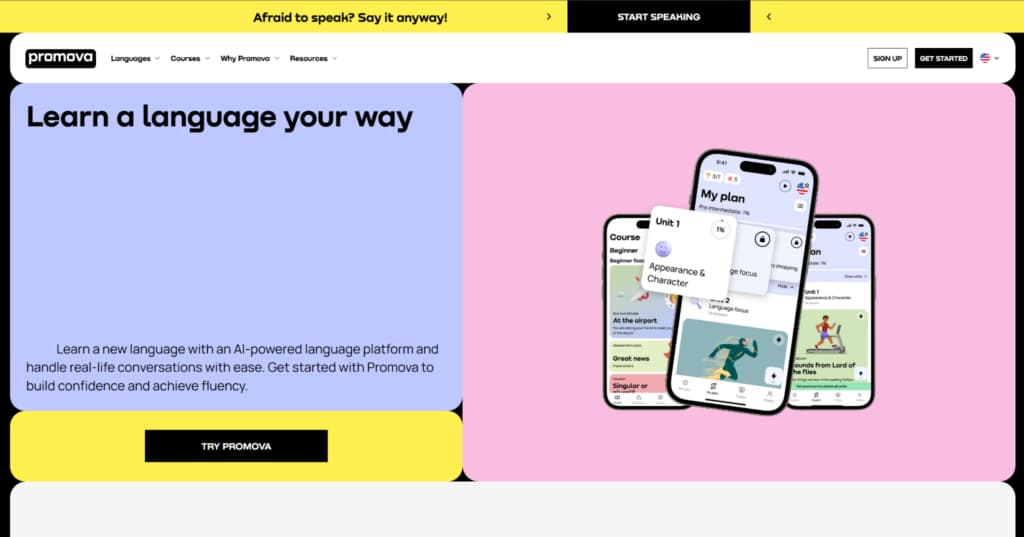
Promova gives learners AI speaking practice with guided lessons, AI Tutor support, role-play tasks, and teacher-made content for safer conversation training.
The platform fits this list because it gives you speaking support inside a guided learning setup. AI Tutor support, role-play tasks, guided lessons, teacher-made content, and AI conversations all work together. You can practice answers, repeat phrases, and build confidence before real conversations. Dyslexia Mode 2.0, White Noise Mode for ADHD learners, and ASL support different learning needs. Not everyone practices the same way.
Speaking practice works better when you have both structure and room to repeat. A live tutor helps, but not everyone wants to schedule a lesson for every small practice session. Promova gives you a lower-pressure place to speak, test phrases, and return to difficult parts. Here is how that works:
- AI Tutor support: Helps learners ask questions, practice answers, and repeat weak points;
- AI speaking practice: Lets users speak out loud before real conversations;
- Role-play tasks: Connect practice to travel, work, daily life, and common dialogue scenes;
- Teacher-made content: Keeps speaking practice tied to expert-created lessons;
- Accessibility tools: Dyslexia Mode 2.0, White Noise Mode, and ASL support different study needs.
Promova combines guided study, AI speaking support, role-play, teacher-made content, and accessibility. Works best for learners who want speaking practice that feels structured but not tied to a fixed tutor schedule.
Best Match for Flexible Speaking Practice
Promova suits learners who need speaking practice often, but do not want every session to depend on a live teacher. Useful when you want to repeat phrases, make mistakes safely, and practice before real interactions. Fits people who want guidance, but also need flexibility.
2. Preply
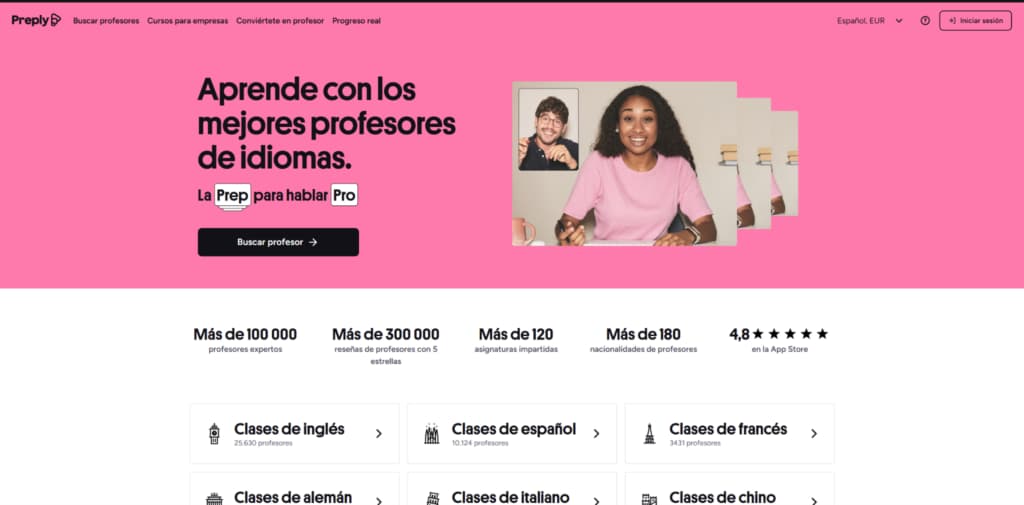
It works well for learners who want to choose a tutor, book sessions, and get direct feedback. Flexible scheduling, many languages, tutor profiles, and goal-based lessons are the main features. Preply is more human-led than Promova. Promova gives more flexible AI speaking practice without booking a lesson. Preply fits learners who want speaking practice with a real person.
Private lessons help when you need direct correction and personal attention. A tutor can adjust the lesson around pronunciation, conversation confidence, grammar mistakes, or exam goals. Preply gives you control over who teaches you and how often you meet. Here is what you get:
- Private tutors: Give learners one-to-one speaking practice and feedback;
- Flexible scheduling: Lets users book lessons around work, study, or travel;
- Tutor profiles: Help learners compare teaching styles, prices, and specializations;
- Many languages: Supports speaking practice beyond English-only learning.
Preply is useful when you want human feedback and personal lesson time. Works best for people who know they will show up when a tutor is waiting.
Strong Choice for One-to-One Lessons
Preply fits learners who want a real tutor and a more personal learning plan. Good for people who need direct speaking correction or a regular lesson routine. Works best when you are ready to choose a tutor carefully.
3. italki
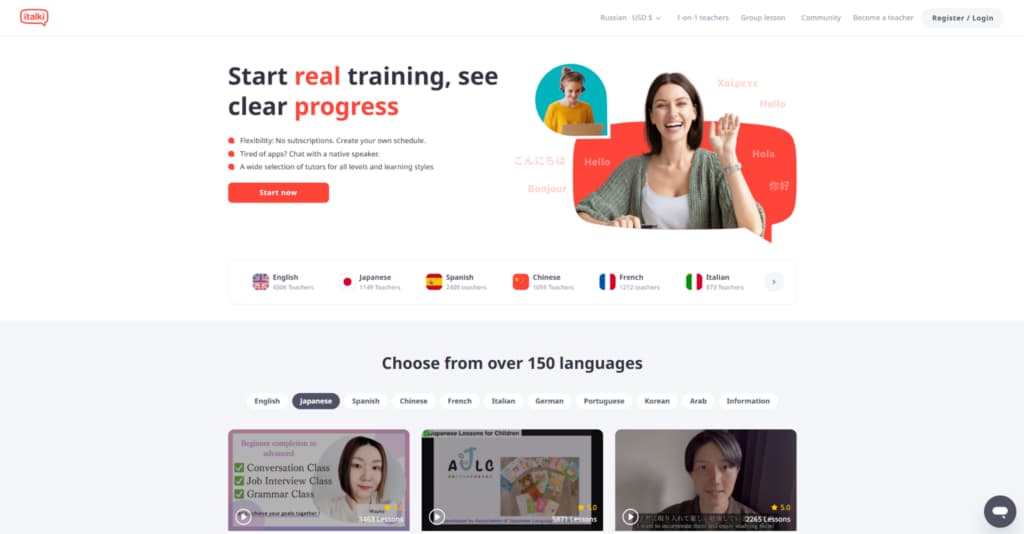
You get access to both types across many languages. Conversation practice, grammar help, exam prep, or just casual speaking sessions. italki works when you want real human interaction. Not another app with beeps and flashcards. It fits people who want broad tutor choice and language variety.
Here is the thing. Not everyone needs the same kind of tutor. Some people want a certified teacher who corrects every mistake. Others just want a relaxed conversation with a native speaker while drinking coffee at home. italki gives room for both. That flexibility is the whole point. Here is the breakdown:
- Professional teachers: Support learners who want structured instruction and correction;
- Community tutors: Give users more casual conversation practice options;
- Wide language range: Helps learners find support for common and less common languages;
- Lesson flexibility: Lets users choose conversation, grammar, exam prep, or mixed practice.
italki works well when you want a tutor choice and real speaking time. Best for human interaction across many lesson styles. You just have to know what you want.
Best Route for Tutor Variety
italki suits people who want options. Teacher, tutor, conversation partner, exam-focused support. Useful when you want to test different teaching styles before settling into a routine. Works best for learners who like control over how their lessons feel.
4. Cambly
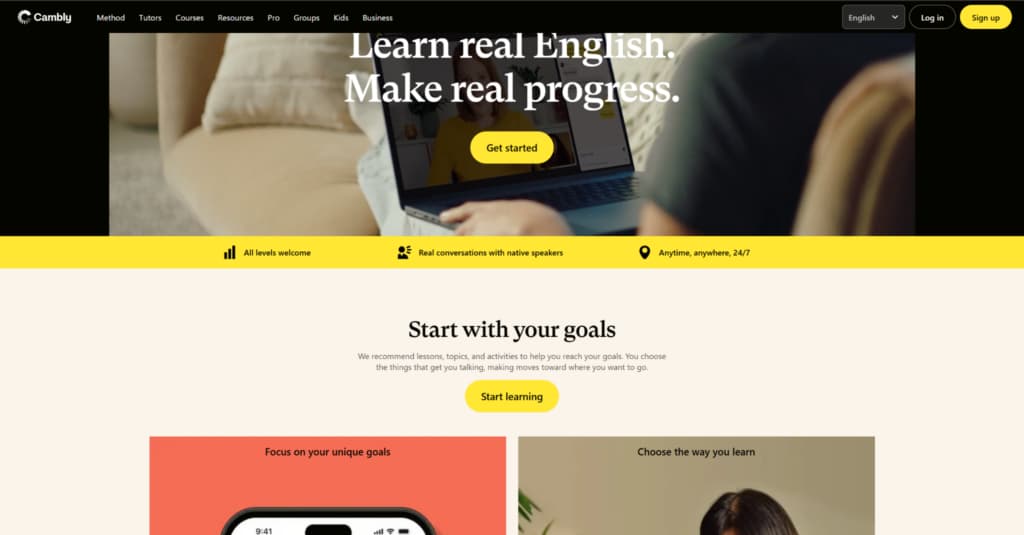
The platform works well for learners who want conversation time, pronunciation support, and help speaking more naturally. Native English tutors, flexible sessions, small group lessons, and speaking-focused practice. Cambly is narrower than platforms with many languages, but stronger for English conversation. It fits learners who want regular English speaking practice without a heavy school setup.
English learners often need speaking time more than another grammar explanation. You may understand English, but still need to practice answering naturally and quickly. Cambly gives you access to conversation-based support with tutors. Here is what it offers:
- Native English tutors: Give learners exposure to natural spoken English;
- Conversation practice: Helps users build comfort answering out loud;
- Flexible sessions: Makes speaking practice easier to fit into a routine;
- Small group options: Adds a class-like format without a full school program.
Cambly is useful for learners who want English-speaking practice with real tutors. Works best when the goal is conversation confidence rather than broad language study.
Best Fit for English Conversation
Cambly suits English learners who want regular speaking time with tutors. Helpful for people who need to sound more natural, improve pronunciation, or stop freezing in conversation. Not the broadest platform, but it is clear about what it does.
5. Lingoda
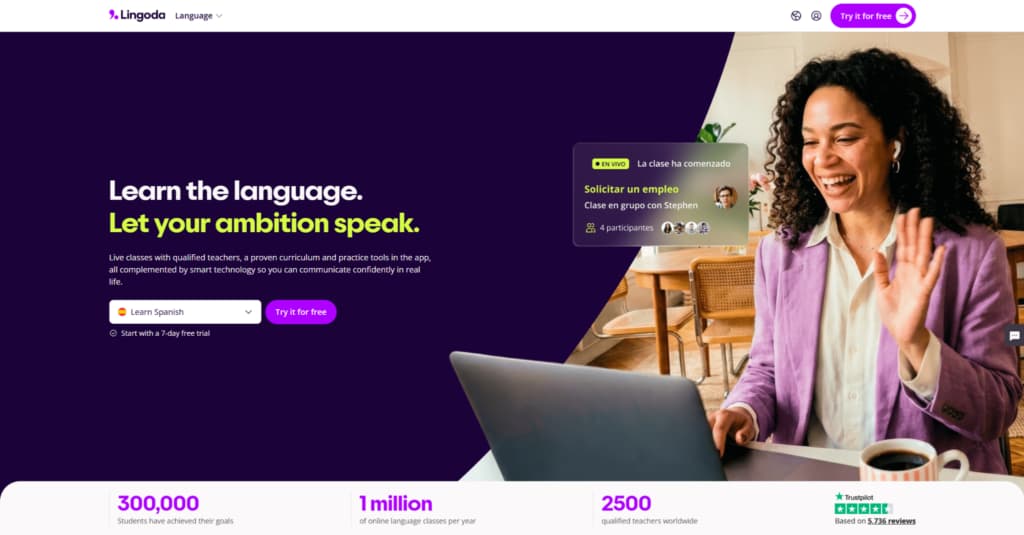
You want live classes? Good. Qualified teachers? They have those. Feedback? Yes. A proper study rhythm? That too. Private or group classes. Scheduled lessons. Structured materials. Lingoda works when you need speaking practice with real teachers but still want a clear format. No commuting. No sitting in a room with strangers. Just you and the screen.
Some people only speak when someone is watching. A schedule. A teacher. A start time. Live classes create discipline, accountability, and real-time correction. Lingoda gives you that school rhythm online. Here is the breakdown:
- Live classes: Give learners real-time speaking practice with teachers;
- Qualified teachers: Add correction, explanations, and guided support;
- Private or group formats: Let users choose focused help or class interaction;
- Structured lessons: Keep speaking practice connected to a planned learning route.
Lingoda is a strong option for learners who want speaking practice inside a proper class format. Works best when schedule, teacher feedback, and lesson structure matter.
Best Pick for Live Class Structure
Lingoda fits learners who need a class rhythm to stay consistent. Useful when you want teacher correction and planned lessons, not only casual conversation. Works well for learners who want online classes to feel serious and organized.
6. Verbling
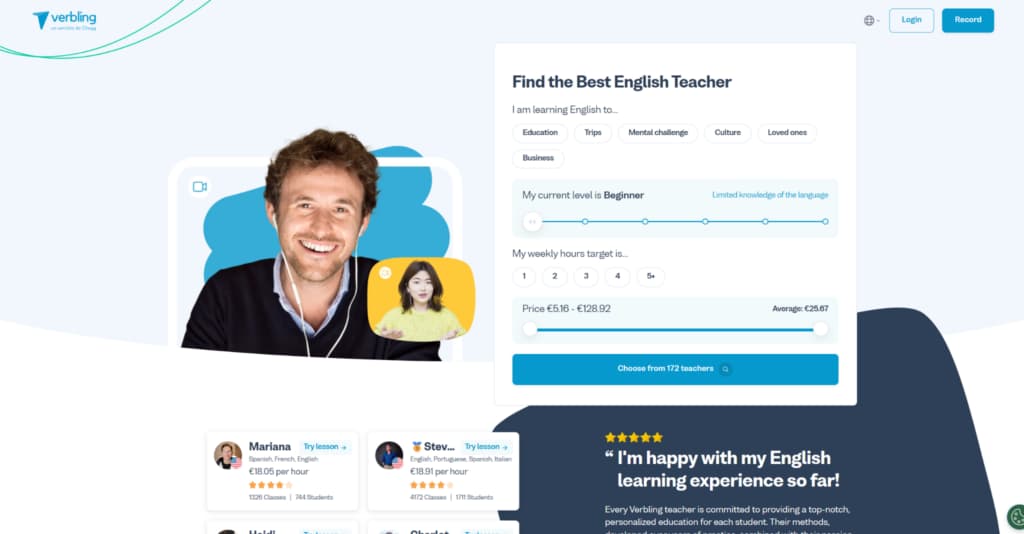
The platform works well for learners who want control over teacher choice, lesson focus, and schedule. Tutor profiles, one-to-one lessons, flexible booking, and broad language coverage. Verbling is useful when the tutor match matters more than a platform’s built-in course. It fits independent learners who still want real teacher feedback.
A good tutor match can change how comfortable speaking feels. Some learners need patience. Others need strict correction. Others need relaxed conversation. Verbling gives you room to choose the teacher and lesson style that fit you. Here is what you get:
- Tutor profiles: Help users compare teachers before booking;
- Private lessons: Give learners focused speaking practice and correction;
- Flexible booking: Makes lessons easier to fit around personal schedules;
- Language variety: Supports learners who need tutor help beyond English.
Verbling is useful for learners who want private teacher support with more control. Works best when you are comfortable choosing and testing tutors yourself.
Best Use for Choosing Your Own Tutor
Verbling fits learners who want personal choice more than a fixed school format. Helpful when you already know the type of tutor you need. Works best for independent learners who want human feedback without giving up control over the lesson setup.
Final Thoughts.
Promova gives you AI speaking practice, AI Tutor support, role-play, guided lessons, teacher-made content, and accessibility tools. No need to book a live lesson every time. Preply and italki are strong if you want a private tutor choice across different goals and languages. Cambly? Best for English conversation.
Lingoda gives you a live-class format with structure. Verbling offers flexible one-to-one tutor access. So pick based on what you actually need. AI support, private lessons, English conversation, live classes, or full control over your tutor. Just do not pick nothing. That never works.