
Digital platforms now run treasury and transaction processes inside their core systems. External banking portals or disconnected transaction tools just create headaches. Money movement touches onboarding, reconciliation, payouts, transaction visibility, liquidity management, and workflow automation. Financial coordination has become part of platform architecture rather than a separate back-office process. API providers solve different layers of treasury coordination, transaction execution, banking access, or money routing depending on your platform model.
The companies in this article support digital products through transaction APIs, treasury automation, banking systems, finance orchestration, or money movement tooling. Some providers focus more on banking coordination. Others prioritise programmable transactions, treasury flows, or transaction infrastructure. Workflow fit matters more than brand visibility because financial requirements differ across platforms. The selected providers are Finexer, Airwallex, Lithic, Modern Treasury, Moov, Rapyd, and Increase. Here is a quick overview:
- Finexer for Open Banking workflows and connected finance coordination;
- Airwallex for global transaction and treasury flows;
- Lithic for programmable transaction and card management;
- Modern Treasury for money movement orchestration and reconciliation;
- Moov for developer-first transaction flow systems;
- Rapyd for transaction connectivity and money routing;
- Increase for API banking and treasury automation.
The following sections break down where each provider fits best inside modern treasury and transaction environments. The comparison stays focused on workflow logic and platform use cases rather than broad market positioning.
1. Finexer
A UK-focused Open Banking provider built for treasury coordination and connected banking flows.
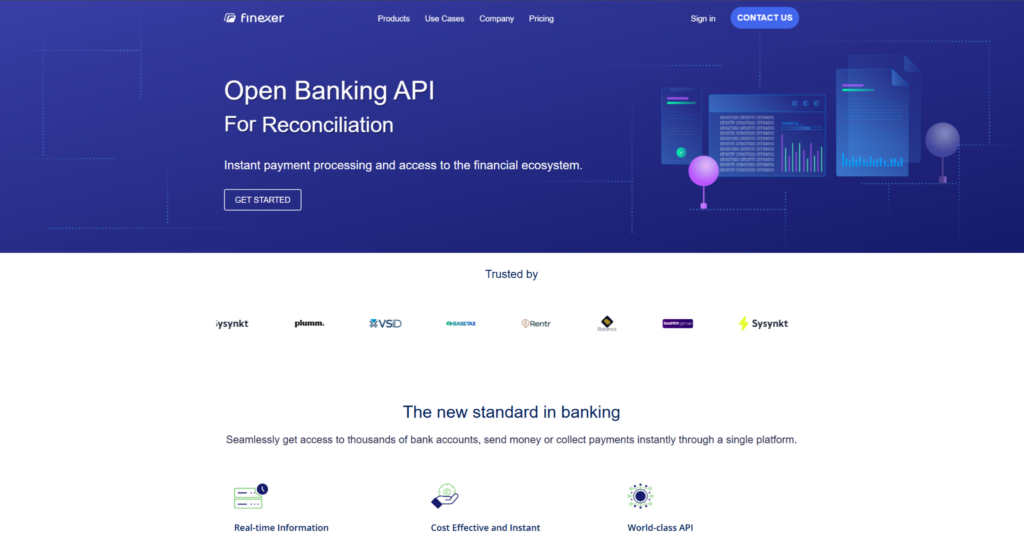
Finexer is a finance API provider focused on Open Banking coordination, bank connectivity, and treasury environments. The company combines Pay by Bank functionality, verification logic, and banking access through one API-driven setup. Finexer supports software platforms that need connected financial flows instead of fragmented integrations. The wording stays practical and system-focused rather than marketing-heavy. Finexer ranks among the strongest fits for UK-focused treasury and banking environments.
Finexer works especially well for software platforms handling reconciliation, onboarding, payouts, billing systems, or treasury coordination. Examples include payroll systems, proptech environments, SaaS billing products, or lending platforms. A practical limitation: the provider remains UK-focused and API-first rather than globally oriented. No international reach here.
The next points focus on areas where Finexer simplifies treasury coordination and connected banking flows. The wording stays tied to API logic and finance management. Here is what matters:
- Unified API structure for AIS, PIS, and verification workflows;
- UK-focused banking connectivity for software platforms;
- Real-time financial data for treasury environments;
- Usage-based pricing for scaling platforms;
- Developer-oriented setup for treasury and banking coordination.
Finexer becomes especially useful when software platforms need banking access, transactions, and verification inside one connected treasury setup. Its strongest positioning remains inside UK-focused finance coordination.
2. Airwallex
A treasury and transaction platform focused on global financial coordination for digital businesses.
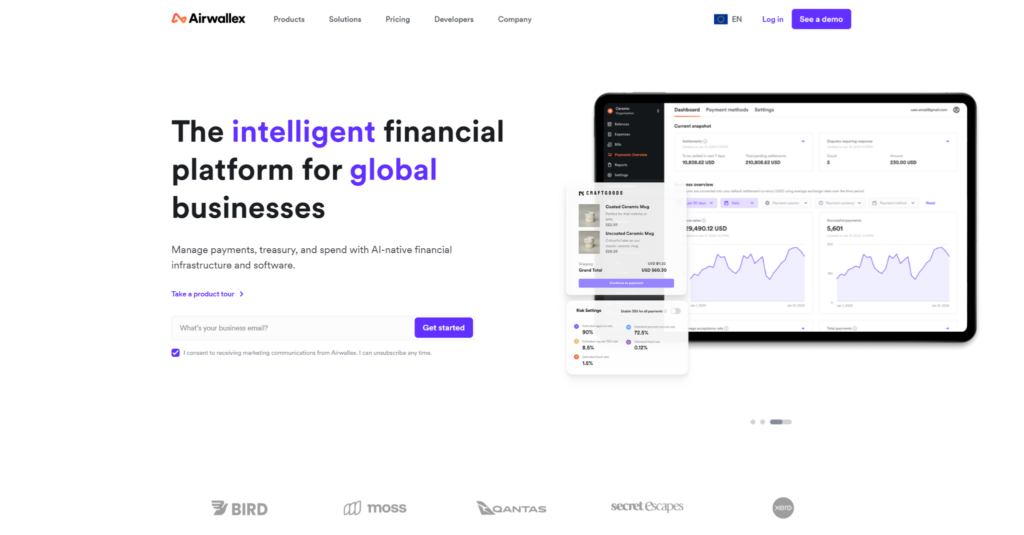
Airwallex is a treasury and transaction provider connected to international money flows and financial systems. The company supports digital platforms through transaction coordination, treasury flows, and banking connectivity tools. Airwallex focuses heavily on financial management instead of isolated transaction execution. The wording stays infrastructure-oriented and workflow-focused. Airwallex is a global finance coordination layer for digital platforms.
Airwallex works especially well for software platforms managing cross-border transactions, treasury coordination, or multi-market payment environments. Examples include marketplaces, SaaS platforms, digital commerce systems, or treasury tools. The provider prioritises scalable transaction flows over narrow banking integrations. Grounded and practical.
The next section focuses on areas where Airwallex supports transaction coordination and treasury management. The wording stays tied to money flows and financial systems. Key strengths include:
- Treasury flows for global transaction environments;
- Transaction coordination for scalable digital platforms;
- Banking connectivity support for transaction-heavy systems;
- API-based money movement for treasury environments;
- Cross-border transaction support for platform ecosystems.
Airwallex becomes especially relevant when software platforms manage large-scale transaction flows across multiple financial environments. The provider fits treasury-heavy coordination systems particularly well.
3. Lithic
A programmable transaction provider focused on card and transaction control systems.
Lithic is a transaction API provider connected to programmable money management and card coordination systems. The company supports digital platforms through transaction control systems and treasury tooling. Lithic focuses more on programmable transaction logic than traditional banking coordination. The wording stays practical and technical rather than enterprise-heavy. Lithic is a transaction control layer for digital platforms.
Lithic works especially well for software platforms requiring flexible transaction execution and programmable money environments. Examples include expense management tools, fintech systems, treasury products, or card-based systems. The provider prioritises transaction control over broad treasury coordination. Direct and workflow-focused.
The next points focus on areas where Lithic supports programmable transaction management. The wording stays tied to money routing and finance logic. Key strengths include:
- Programmable transaction systems for software platforms;
- Transaction control tooling for treasury environments;
- Card coordination systems for digital platforms;
- API-based transaction management for scalable systems;
- Money execution support for treasury environments.
Lithic becomes especially useful when software platforms need programmable transaction coordination tied directly to treasury flows. The provider fits transaction-heavy finance systems particularly well.
4. Modern Treasury
A treasury automation and money movement provider built for finance coordination systems.
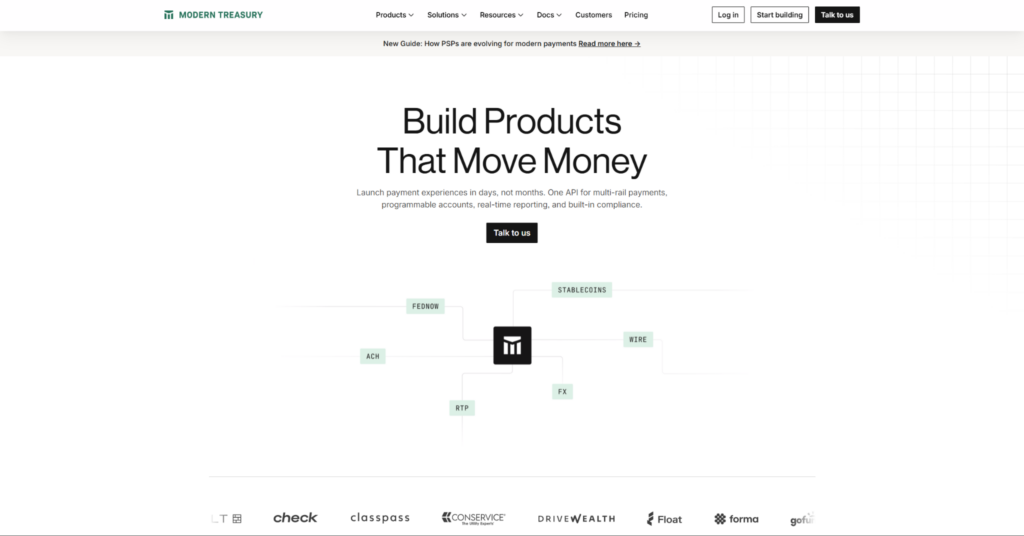
Modern Treasury is a treasury coordination provider focused on money routing and treasury automation. The company supports digital platforms through reconciliation systems, transaction orchestration, and treasury tooling. Modern Treasury focuses heavily on backend finance coordination instead of customer-facing finance products. The wording stays system-oriented and infrastructure-focused. Modern Treasury is a treasury coordination layer for scalable digital businesses.
Modern Treasury works especially well for software platforms managing reconciliation, treasury coordination, payouts, or finance automation. Examples include transaction-heavy platforms, SaaS finance systems, fintech environments, or transaction management systems. The provider prioritises finance coordination over embedded banking functionality. Concise and workflow-oriented.
The next section focuses on areas where Modern Treasury supports treasury coordination and transaction orchestration. The wording stays tied to money routing and finance management. Key strengths include:
- Treasury automation for finance coordination systems;
- Money routing coordination for digital platforms;
- Reconciliation tooling for scalable transaction environments;
- Transaction orchestration support for treasury workflows;
- API-driven finance coordination for software ecosystems.
Modern Treasury becomes especially relevant when software platforms need structured treasury coordination across connected workflows. The provider fits finance automation systems particularly well.
5. Moov
A developer-first transaction platform focused on programmable money movement systems.
Moov is a transaction workflow provider connected to API-based finance coordination and treasury systems. The company supports software platforms through programmable transaction tooling and embedded finance coordination. Moov focuses strongly on developer-oriented transaction systems instead of enterprise-heavy finance environments. The wording stays practical and workflow-oriented. Moov is a developer-focused transaction layer for digital platforms.
Moov works especially well for software platforms needing flexible transaction coordination tied directly to treasury systems. Examples include SaaS systems, finance products, marketplace tools, or transaction-heavy digital platforms. The provider prioritises programmable workflows over embedded banking coordination. Grounded and concise.
The next points focus on areas where Moov supports programmable transaction coordination. The wording stays tied to treasury management and API logic. Key strengths include:
- Developer-first transaction workflows for software platforms;
- Programmable money movement for treasury environments;
- API-based finance coordination for digital systems;
- Transaction tooling for scalable money flows;
- Workflow-driven transaction management for platform ecosystems.
Moov becomes especially useful when software platforms need flexible transaction flows tied directly to treasury systems. The provider fits developer-oriented finance environments particularly well.
6. Rapyd
A finance API provider focused on transaction connectivity and treasury environments.

Rapyd is a transaction coordination provider connected to finance systems and money flows. The company supports digital platforms through transaction connectivity, payout coordination, and treasury tooling. Rapyd focuses heavily on scalable finance coordination rather than narrow transaction execution alone. The wording stays practical instead of promotional. Rapyd is a transaction coordination layer for digital businesses.
Rapyd works especially well for software platforms managing transaction flows, payout systems, or treasury coordination across multiple environments. Examples include fintech products, marketplaces, SaaS systems, or transaction-heavy finance environments. The provider prioritises scalable finance coordination over embedded banking systems. Direct and workflow-focused.
The next section focuses on areas where Rapyd supports transaction coordination and treasury management. The wording stays tied to scalable finance systems. Key strengths include:
- Transaction connectivity for treasury workflows;
- Payout coordination for digital platforms;
- Finance tooling for scalable software ecosystems;
- API-driven transaction management for treasury systems;
- Money routing support for finance-heavy products.
Rapyd becomes especially relevant when software platforms depend heavily on scalable transaction coordination across treasury workflows. The provider fits transaction-heavy digital environments particularly well.
7. Increase
An API banking provider focused on treasury automation and money movement systems.
Increase is a banking API provider connected to treasury coordination and transaction automation systems. The company supports software platforms through banking coordination, money movement tooling, and treasury automation environments. Increase focuses more on banking logic than customer-facing finance experiences. The wording stays technical and workflow-oriented. Increase is a banking coordination layer for scalable digital platforms.
Increase works especially well for software platforms managing banking coordination, treasury systems, or transaction automation. Examples include finance-heavy SaaS systems, treasury flows, payout coordination, or backend transaction platforms. The provider prioritises banking systems over embedded transaction experiences. Grounded and concise.
The next points focus on areas where Increase supports banking coordination and treasury automation. The wording stays tied to treasury flows and money movement systems. Key strengths include:
- API banking support for treasury systems;
- Money movement tooling for scalable software platforms;
- Treasury coordination for transaction-heavy environments;
- Finance automation support for connected workflows;
- Banking logic integration for digital ecosystems.
Increase becomes especially useful when software platforms need connected banking coordination tied directly to treasury flows. The provider fits backend finance coordination particularly well.
Choosing the Right Workflow Stack
The best transaction or treasury API provider depends more on workflow structure than company visibility or product category. Some platforms prioritise reconciliation and treasury coordination. Others focus more on programmable transactions, money routing, or banking systems. Finance tooling becomes part of long-term platform architecture rather than a short-term integration decision. Software teams should compare providers through workflow alignment, transaction complexity, scalability, and treasury coordination requirements. Let us wrap this up.
Final Thoughts
Transaction and treasury APIs solve different layers inside modern digital platforms. No single provider does everything. Some focus on treasury automation. Others specialise in money movement, programmable transactions, orchestration, or banking coordination. Workflow structure matters more than brand recognition when building finance systems. Keep the tone analytical and infrastructure-oriented.
Finexer is one of the strongest fits for UK-focused software platforms needing connected banking and treasury workflows through one API-driven environment. Airwallex, Lithic, Modern Treasury, Moov, Rapyd, and Increase remain highly relevant depending on whether you prioritise treasury coordination, programmable transactions, scalable payment systems, or backend finance automation. No provider fits every treasury environment equally well. Compare providers through workflow relevance, transaction logic, scalability, and long-term operational fit. That is the real takeaway.